
A sun visor is usually better when airflow, heat release, and hairstyle freedom are the priority, while a baseball cap is better when you want more scalp coverage and all-around everyday versatility. Both shade the eyes and upper face with a front brim, but the major difference is the crown: a visor leaves the top of the head open, while a baseball cap covers it.

So, when comparing a sun visor vs baseball cap, there is no universal winner.
For hot-weather golf, tennis, running, or other activities where heat and sweat become a major concern, a visor can feel less restrictive. For prolonged sun exposure, casual daily wear, travel, or situations where the scalp needs coverage, a baseball cap is often the more practical choice.
The right decision depends on what you want your headwear to do.
Sun Visor vs Baseball Cap: The Core Difference
The most important difference is not fashion. It is coverage.
A sun visor normally includes a front brim, headband, sweatband, and closure, but no full crown. The top of the head remains exposed.
A baseball cap uses a similar forward-facing brim but adds a fabric crown that covers the top and sides of the head.
That single structural difference affects almost everything else:
A visor generally provides more direct airflow around the head, while a baseball cap provides more physical coverage.
This creates the central trade-off:
Sun visor = more ventilation, less coverage.
Baseball cap = more coverage, less open airflow.
Understanding that trade-off makes nearly every other comparison easier.
Which Is Better for Hot Weather?
If your main concern is staying comfortable during physical activity in hot weather, a sun visor often has the advantage.
Because there is no crown, air can circulate directly around the scalp and hair. Heat generated during running, tennis, golf, or training can escape without being trapped beneath another fabric layer.
That can be particularly noticeable in humid conditions or during long sessions outdoors.
A baseball cap, however, should not automatically be considered “hot.”
Modern performance baseball caps can use lightweight polyester, mesh panels, perforations, moisture-wicking sweatbands, and quick-drying fabrics. A well-designed performance cap may feel considerably cooler than a heavy cotton visor.
Therefore, the better comparison is not simply:
visor = cool / cap = hot.
Instead, consider both headwear structure and material construction.
All else being equal, the visor’s open crown provides more airflow. But fabric weight, ventilation, sweatband design, color, and fit can substantially change real-world comfort.
Which Provides Better Sun Protection?
This is where the baseball cap has a clear advantage.
Both a sun visor and a baseball cap use a front brim to shade the forehead, eyes, and parts of the face. But the baseball cap also places fabric over the scalp.
A visor does not.
That difference matters during prolonged exposure to strong sunlight.
If someone has very short hair, thinning hair, or a shaved head, leaving the scalp exposed may significantly reduce the visor’s suitability for long periods outside.
A baseball cap provides more useful coverage because the crown creates a physical barrier over the top of the head.
However, a standard baseball cap still does not provide complete sun protection. The ears, sides of the face, and back of the neck normally remain exposed.
So the sun-protection hierarchy should not be oversimplified.
When comparing only these two:
Baseball cap provides more coverage than a visor.
But for maximum outdoor sun coverage, a wide-brim sun hat generally provides more protection than either option.
Which Is Better for Sweating?
This depends on two separate issues: heat release and sweat management.
A visor can reduce the amount of fabric covering the head, which may feel more comfortable for people who sweat heavily during exercise.
But removing the crown does not automatically stop sweat from reaching the face.
The sweatband is especially important.
A well-designed sports visor often uses an absorbent or moisture-wicking band around the forehead to manage perspiration before it reaches the eyes.
Performance baseball caps can use exactly the same technology.
The difference is that the baseball cap also has crown fabric that may absorb moisture.

This can be an advantage or disadvantage.
A technical quick-drying cap may efficiently manage perspiration, while a heavy cotton cap may absorb sweat, become heavier, and take longer to dry.
So for heavy exercise:
A visor usually wins on open ventilation.
The winner on sweat management depends much more on fabric and sweatband construction.
Sun Visor vs Baseball Cap for Hair
For people with long hair, thick hair, ponytails, or buns, the visor often offers greater flexibility.
Because the crown is completely open, the hair is not forced underneath fabric.
A high ponytail can sit naturally above the headband. A bun does not have to pass through a small rear opening. Thick hair is less compressed.
A conventional baseball cap usually limits hairstyle placement because the crown surrounds the head.
Some baseball caps solve this with ponytail openings or special back constructions, but the visor remains structurally simpler for hairstyles that extend upward from the head.
This is one reason visors remain especially common in tennis and women’s golf.
The advantage is not merely appearance.
Hair volume can also affect heat perception and fit. When thick hair is trapped underneath a cap, some wearers may feel warmer or experience additional pressure.
Which One Is Better for Golf?
Golf is one of the situations where the decision is genuinely close.
A golfer may remain outdoors for several hours, which means both heat management and sun exposure matter.
A visor allows excellent ventilation and keeps fabric away from the top of the head. This can make it particularly comfortable during hot rounds.
It also works well with traditional golf styling and provides useful shade around the eyes.
A baseball-style golf cap provides more scalp coverage, which becomes more important during long rounds under direct sunlight.
Therefore:
Choose a golf visor when ventilation and warm-weather comfort are the main priorities.
Choose a golf cap when scalp coverage and longer sun exposure matter more.
Neither is inherently better for playing golf.
The better product depends on the conditions.
Which Is Better for Running?
For running, the decision depends heavily on temperature, UV exposure, sweat rate, and the runner’s hair.
During a hot run, a visor leaves the top of the head open and allows more air to move around the scalp.
For some runners, that makes it feel less restrictive than a full cap.
A visor also allows sweat and heat to escape without saturating crown fabric.
However, a baseball cap can become the better option when the runner needs scalp coverage, expects prolonged sun exposure, or wants more protection from light rain.
Performance running caps can also be extremely light.
Modern technical fabrics mean the difference in weight between a performance cap and visor may be relatively small.
So runners should evaluate:
temperature + sun exposure + hair coverage + fabric + sweat management, rather than choosing solely by appearance.
Which Is Better for Tennis?
A sun visor is particularly well suited to tennis.
Tennis involves repeated movement, significant heat generation, bright outdoor conditions, and a constant need to maintain forward visibility.
The visor shades the eyes while keeping the crown open.
It also accommodates high ponytails and tied hairstyles easily.
That combination makes the visor highly practical for warm-weather tennis.
A baseball cap becomes preferable when scalp protection is more important or when conditions are cooler.
Again, neither choice changes athletic performance by itself.
The value comes from comfort, shade, moisture management, fit, and whether the headwear stays secure during movement.
What about Everyday Wear?
Here the baseball cap generally has the advantage.
A baseball cap works across a much broader range of situations.
It can be worn for:
casual outfits, commuting, travel, sports, streetwear, outdoor activities, corporate uniforms, promotional merchandise, and branded fashion collections.
Its full crown also creates much more space for design variation.
Crown profile, panel construction, fabric, closure, visor shape, embroidery, patches, prints, washing effects, and distressing can all significantly change the appearance.
This makes baseball caps especially versatile for fashion and branding.
Visors have a more specialized identity.
They are strongly associated with warm weather, resorts, golf, tennis, running, and outdoor leisure.
That specialization can be an advantage when the product is designed for a clearly defined use case.
Sun Visor vs Baseball Cap for Brands
For businesses developing custom headwear, the question should not be:
Which product is more popular?
It should be:
Which product better matches the customer’s actual use case?
A sportswear brand developing products for tennis, golf, resort wear, running, or summer events may have a strong reason to include visors.
Buyers sourcing a Wholesale Visor Cap should think carefully about fabric weight, sweatband construction, visor curvature, closure, moisture management, logo position, and intended activity.
Baseball caps provide a broader product platform.
A professional Baseball Cap Manufacturer can typically develop different crown profiles, panel constructions, materials, visor shapes, closures, and decoration methods for sports, retail, corporate, streetwear, and promotional applications.
For brands, this means:
A visor works especially well when the product has a clear warm-weather or performance purpose.
A baseball cap works especially well when versatility and broad market use are more important.
Branding and Logo Placement
Both styles provide good front-facing branding opportunities, but their structures create different visual effects.
On a baseball cap, the crown gives designers a large front area for embroidery, patches, printing, woven labels, rubber patches, leather patches, and dimensional logos.
There is also space on the side and back panels.
A visor has less total surface area.
That makes front logo placement more visually concentrated.
For golf clubs, tennis brands, resorts, sporting events, teams, and corporate programs, this can create a clean and highly recognizable look.
But brands should avoid selecting decoration only by appearance.
A heavy embroidered logo can change the balance of a lightweight performance visor, while certain printing or patch methods may work better on technical materials.
Logo method should therefore be selected together with fabric and intended use.
SUMKCAPS provides custom headwear solutions for brands and businesses, with options covering materials, colors, logo decoration, closures, sizing, packaging, and different visor and baseball cap constructions.
Sun Visor vs Baseball Cap: How Should You Choose?
Instead of asking which product is universally better, compare your priorities.
Choose a sun visor if your biggest priorities are better airflow, less material covering the head, high ponytail or bun compatibility, hot-weather sports, and lightweight open-top comfort.

Sumkcaps 231104 Custom Full Printing UV Foam Camo Visor Cap
Sumkcaps 231104 Custom Full Printing UV Foam Camo Visor Is One Of Popular Cap Style, Light Weight And Breathable Well. Perfect Hat For Your Small Business, Sports Team, Special Event, & More. Change Your Own Logo Easily.
Choose a baseball cap if your biggest priorities are scalp coverage, broader everyday use, more styling options, more decoration space, and better suitability across different weather conditions.
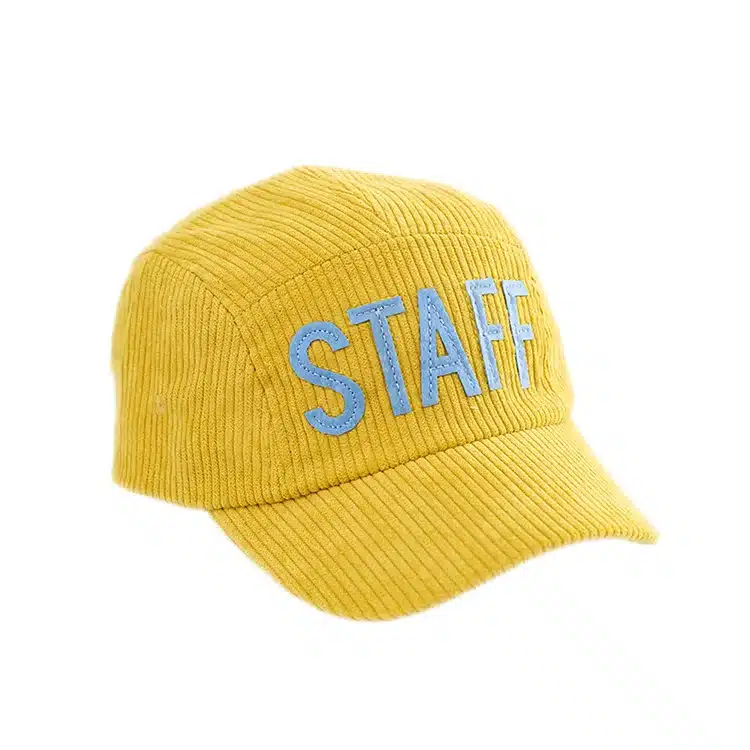
5 Panel Hat Curved Brim Corduroy Baseball Cap Wholesale
Introducing our 5 Panel Hat Curved Brim Corduroy Baseball Caps, combining classic style with modern quality. Designed for bulk buyers and fashion enthusiasts, these caps feature a unique corduroy fabric and a comfortable curved brim. Perfect for various settings, they offer a trendy look with exceptional comfort. Take advantage of our wholesale pricing and add these stylish caps to your collection today!
The crucial distinction is straightforward:
A visor prioritizes ventilation. A baseball cap prioritizes coverage.
Everything else—from materials and sweatbands to logo methods and intended use—should be evaluated around that difference.
Final Verdict: Sun Visor vs Baseball Cap — Which Is Better?
For hot-weather exercise and maximum airflow, a sun visor is usually the better choice. For scalp coverage, everyday versatility, and broader protection, a baseball cap is usually better.
The visor’s biggest advantage is its open crown. It keeps the front brim users expect from athletic headwear while removing the fabric covering the top of the head.
The baseball cap does the opposite: it sacrifices some open ventilation in exchange for more coverage.
That makes their strengths different rather than competing.
For running, tennis, and hot-weather golf, a visor can be particularly comfortable.
For prolonged outdoor exposure, casual wear, travel, branding, and all-purpose use, a baseball cap usually offers greater flexibility.
Ultimately, Sun Visor vs Baseball Cap is not about choosing the better hat—it is about deciding whether airflow or coverage matters more for the situation.
FAQ
A visor is generally better for hot-weather golf when ventilation is the priority. A golf hat provides more scalp coverage and may be better for long rounds under strong sunlight. Choose based on heat, sun exposure, and personal comfort.
A running visor offers more airflow and can feel less restrictive in hot conditions. A running hat provides more scalp coverage and is usually better during prolonged sun exposure, cooler weather, or light rain.
A tennis visor is ideal for ventilation, eye shade, and high ponytails. A tennis hat provides more head coverage. In hot conditions, a visor often feels more open; for stronger sun exposure, a hat offers more scalp protection.


