
Trapper hats and ushankas are both winter hats designed to protect the head and ears from cold weather, but they are not exactly the same. A trapper hat typically combines ear flaps with a structured crown and often a front visor, while an ushanka is traditionally recognized by its rounded crown, large ear flaps, and tie closures. The better choice depends on the level of warmth, coverage, style, and intended use.
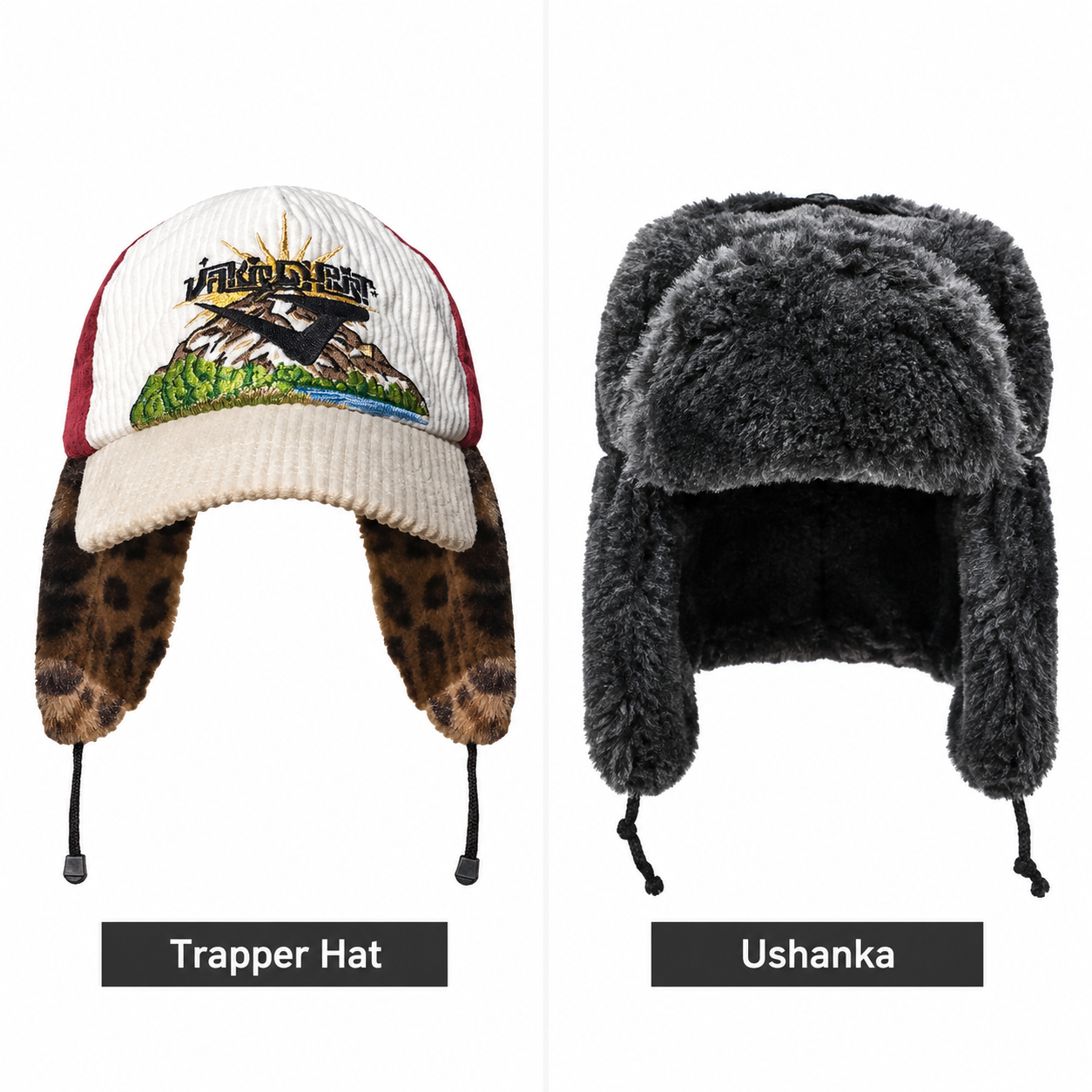
Qu'est-ce qu'un chapeau de trappeur ?
A trapper hat is a cold-weather hat designed with ear flaps that can cover the ears and sides of the face. Many designs also include a front visor and an insulated or fur-style lining. Originally associated with outdoor work and hunting in cold environments, modern trapper hats are also widely used for winter travel, outdoor activities, workwear, and fashion.
Key Features of a Trapper Hat
The defining feature of a trapper hat is its ear-flap construction. The flaps can usually be worn down to protect the ears or secured upward when additional coverage is not needed.
Common design features include:
- Ear flaps: Provide additional protection around the ears and sides of the head.
- Insulated lining: Often made with fleece, faux fur, quilted fabric, or other insulating materials.
- Structured crown: Provides head coverage while allowing different styling options.
- Front visor: Many trapper hats have a short bill that helps shield the eyes and gives the hat a more structured appearance.
- Adjustable fastening: Straps, buckles, snaps, or ties can help secure the ear flaps and improve fit.
Unlike a single standardized hat shape, trapper hats can vary considerably in crown construction, materials, lining, visor shape, and fastening systems.

6 Panel Wool Winter Trapper Cap with Earflap Wholesale (bonnet de trappeur d'hiver en laine avec rabat d'oreille)
Notre casquette d'hiver à bord plat en laine avec 6 panneaux est conçue pour les hommes élégants qui apprécient à la fois le confort et la fonctionnalité. Ces casquettes à rabat souple sont parfaites pour l'hiver, combinant des matériaux de première qualité avec un design tendance. Idéales pour la vente en gros, ces casquettes sont indispensables pour tout détaillant souhaitant proposer des couvre-chefs d'hiver de haute qualité et à la mode.
Common Materials Used for Trapper Hats
Trapper hats can be made from a wide range of materials depending on the intended level of warmth, weather resistance, and appearance.
Common materials include:
- Coton
- Polyester
- Nylon
- Wool and wool blends
- Fausse fourrure
- Polaire
- Quilted fabrics
- Toile
- Velours côtelé
- Suede or leather-style materials
The outer material and lining serve different purposes. The outer shell can provide durability and resistance to wind or moisture, while the lining and insulation determine much of the hat’s warmth and comfort.
Here you can find more detailed information about the materials used for trapper hats.
What Is an Ushanka?
An ushanka is a traditional cold-weather hat most strongly associated with Russia and other parts of Eastern Europe and northern Eurasia. Its name comes from the Russian word ushi, meaning “ears,” reflecting its defining ear-covering flaps.
The classic ushanka has a rounded crown, two large ear flaps, and ties that allow the flaps to be worn down over the ears or fastened upward. Traditional versions are often made with fur or other warm materials, although modern versions use synthetic fabrics and faux fur as well.
Key Features of an Ushanka
The most recognizable features of an ushanka are its rounded crown and prominent ear flaps.
Typical characteristics include:
- Rounded crown: Creates the distinctive traditional ushanka silhouette.
- Large ear flaps: Extend down from the sides of the hat to cover the ears and part of the face or neck.
- Tie closures: Traditionally used to secure the ear flaps under the chin or above the crown.
- Warm lining: Often made with fur, faux fur, fleece, or other insulating materials.
- Minimal or no front visor: Traditional ushankas generally do not have the pronounced front bill commonly found on many trapper hats.
Modern ushankas can vary significantly from traditional designs, so not every contemporary version follows the classic construction exactly.
Where Did the Ushanka Originate?
The ushanka is closely associated with Russia and the broader cold-weather clothing traditions of Eastern Europe and northern Eurasia. Its modern form developed from earlier ear-flap winter hats used in cold climates.
The design became particularly recognizable through its use in Russian and Soviet military and winter clothing. Today, the ushanka is both a functional cold-weather hat and a recognizable cultural and fashion item.
Trapper Hat vs. Ushanka: Key Differences
Although both hats use ear flaps for additional protection, their construction and visual identity are different. The following table highlights the main distinctions.
| Fonctionnalité | Chapeau de trappeur | Ushanka |
|---|---|---|
| Basic Design | Winter hat with ear flaps, often combined with a front visor | Traditional winter hat with a rounded crown and large ear flaps |
| Forme de couronne | Can be structured, fitted, or varied depending on the design | Usually rounded and relatively uniform |
| Oreillettes | Common, but size and shape vary | One of the defining features and usually relatively large |
| Front Visor | Often has a short or structured visor | Traditional designs generally have little or no prominent visor |
| Fastening | May use straps, buckles, snaps, or ties | Traditionally uses tie strings |
| Doublure | Fleece, faux fur, quilted insulation, wool, and other materials | Traditionally fur or warm lining; modern versions may use synthetic insulation |
| Style | Outdoor, workwear, winter fashion, and contemporary designs | Traditional, military-inspired, cultural, and winter styles |
| Typical Coverage | Head and ears, with coverage depending on flap design | Extensive ear and side-of-face coverage |
| Design Flexibility | High; available in many shapes, materials, and finishes | More closely associated with the classic ushanka silhouette |
| Utilisations courantes | Outdoor activities, winter travel, workwear, hunting, fishing, and fashion | Cold-weather wear, winter travel, traditional styling, and fashion |
The key distinction is therefore not simply the presence of ear flaps. Both designs can have them. The more useful way to distinguish them is to look at the overall construction: a trapper hat often has a more flexible modern design language and may include a front visor, while an ushanka is defined more strongly by its rounded crown, large ear flaps, and traditional fastening system.
Trapper Hat vs. Ushanka: Which Is Warmer?
Neither style is automatically warmer. Warmth depends more on the construction and materials than on the name of the hat.
A well-insulated trapper hat can provide excellent protection in freezing conditions, while a properly constructed ushanka can offer substantial coverage around the ears and sides of the face. The actual performance depends on several factors:
- Insulation thickness: More insulation can improve warmth, although excessive thickness may affect comfort.
- Lining material: Faux fur, fleece, wool, and insulated quilted fabrics can provide different levels of warmth and comfort.
- Ear-flap coverage: Larger flaps can protect more of the ears and sides of the head.
- Wind resistance: A tightly woven or weather-resistant outer shell can reduce heat loss in windy conditions.
- En forme : A hat that fits properly can reduce gaps through which cold air enters.
- Weather conditions: Wind, humidity, temperature, and activity level all affect how warm a hat feels.
If maximum ear coverage is the priority, a traditional ushanka is a strong option. If you want similar insulation combined with a more structured, versatile design, a trapper hat can provide comparable warmth while offering more design flexibility.
Trapper Hat vs. Ushanka: Which One Should You Choose?
The right choice depends on what you need the hat to do rather than simply which style looks warmer.
Choose a Trapper Hat If You Want:
A trapper hat is generally the better choice when you want:
- A more contemporary outdoor style
- A front visor for additional eye protection
- Flexible material and color options
- A hat suitable for both outdoor and everyday wear
- A wider range of customization possibilities
- A design that can work with outdoor, workwear, streetwear, or winter fashion collections
For apparel brands and product developers, trapper hats also provide considerable room for design variation. The crown, visor, ear flaps, lining, materials, colors, and branding details can all be adjusted to create a distinct product.
Choose an Ushanka If You Want:
An ushanka may be the better choice when you prioritize:
- Traditional winter styling
- A recognizable Russian or Eastern European-inspired appearance
- Large ear flaps
- Extensive ear and side-of-face coverage
- A classic cold-weather silhouette
- A design strongly associated with winter and extreme cold
For fashion collections, an ushanka can also work when the cultural or vintage character of the design is part of the product concept.
Ultimately, choose a trapper hat for greater design versatility and a modern outdoor profile, or choose an ushanka for a more traditional silhouette and distinctive ear coverage.
Buy Custom Trapper Hats from SUMKCAPS
SUMKCAPS fournit custom trapper hat solutions for apparel brands, wholesalers, distributors, outdoor brands, and other B2B buyers. Rather than limiting buyers to a fixed catalog design, SUMKCAPS can customize trapper hats according to the required material, color, construction, lining, ear-flap design, visor shape, and branding details.
Depending on the product concept, customization can include cotton, polyester, nylon, wool blends, fleece, faux fur, and other suitable materials. Branding options can also be developed around the overall product design, including embroidery, patches, labels, and other decorative details.
This flexibility is particularly useful for brands developing seasonal headwear collections where the trapper hat needs to match a specific color palette, fabric selection, logo system, or overall apparel range.
Our Trapper Hat Collection


Conclusion
Trapper hats and ushankas share the same basic purpose: protecting the head and ears in cold weather. However, they differ in construction and design identity. Trapper hats are generally more flexible in shape, materials, visor design, and customization, while ushankas are recognized by their rounded crowns, large ear flaps, and traditional fastening system.
Neither style is inherently warmer. Insulation, lining, ear coverage, wind resistance, and fit have a greater impact on thermal performance. For modern outdoor, workwear, streetwear, or customizable winter collections, a trapper hat offers broader design flexibility. For a traditional cold-weather look with distinctive ear coverage, an ushanka is the more recognizable choice.
FAQ
Both have ear flaps and are designed for cold weather, but their crown shapes, visor designs, and fastening systems are different.
No. Trapper Hats typically offer more varied designs and may include a visor, while Ushankas have a rounded crown and large ear flaps.
Yes. Ushankas remain popular for winter wear and are also used in fashion for their distinctive traditional appearance.
No. Trapper Hats are also popular for winter travel, outdoor work, hiking, fishing, everyday wear, and fashion.
Measure around your head above the ears and compare the measurement with the manufacturer’s size chart for the best fit.


