跳到内容
跳到内容 
The main difference between K-Frame and A-Frame hats is the construction and visual profile of the front crown. A-Frame hats generally feature a more pronounced, upright front profile that creates a bold and structured appearance, while K-Frame hats typically have a smoother, more controlled crown silhouette. The choice depends on the intended look, branding requirements, target market, and application rather than one frame being universally better. A-Frame construction can suit streetwear, promotional products, and brands seeking a distinctive front profile, while K-Frame construction can work well for lifestyle, everyday, and minimalist designs. For custom or wholesale production, buyers should also consider crown height, front-panel construction, visor shape, materials, decoration, and fit, because these specifications ultimately determine the finished appearance more than the frame name alone.
What Is an A-Frame Hat?
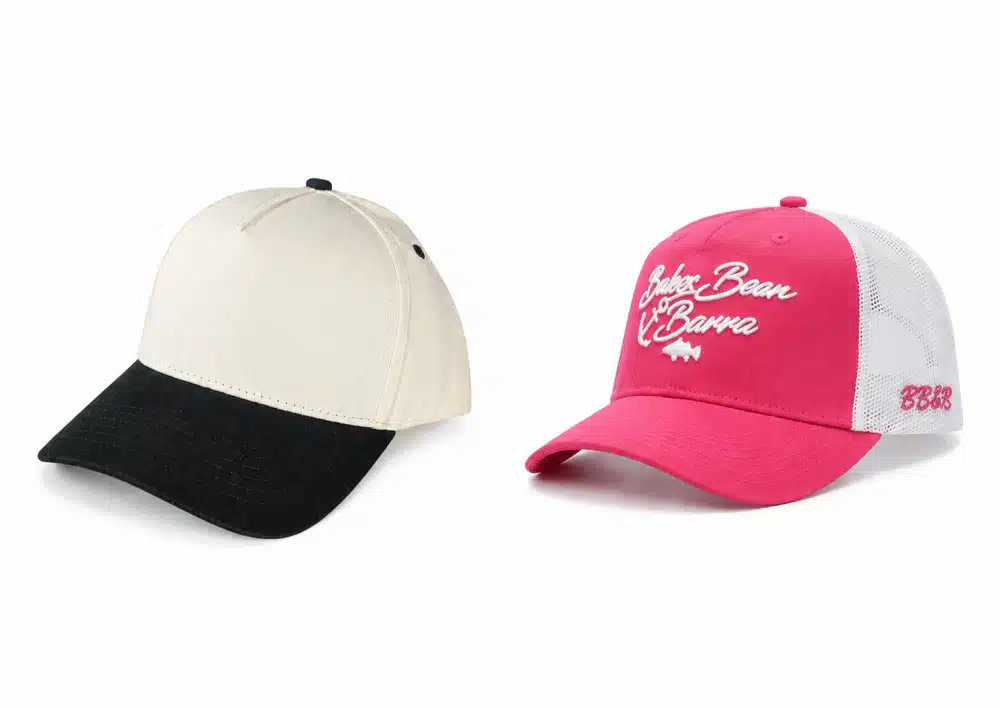
An A-Frame hat is a structured cap defined primarily by the shape of its front crown and the way the front panels create a pronounced, upright profile above the visor. Unlike a standard low-profile cap, an A-Frame design gives the front of the crown more visual height and structure, creating a distinctive silhouette when viewed from the front or side. The term refers mainly to the crown and front-panel construction, not to a specific fabric, brim, closure, or decoration method.
A-Frame Hat Structure
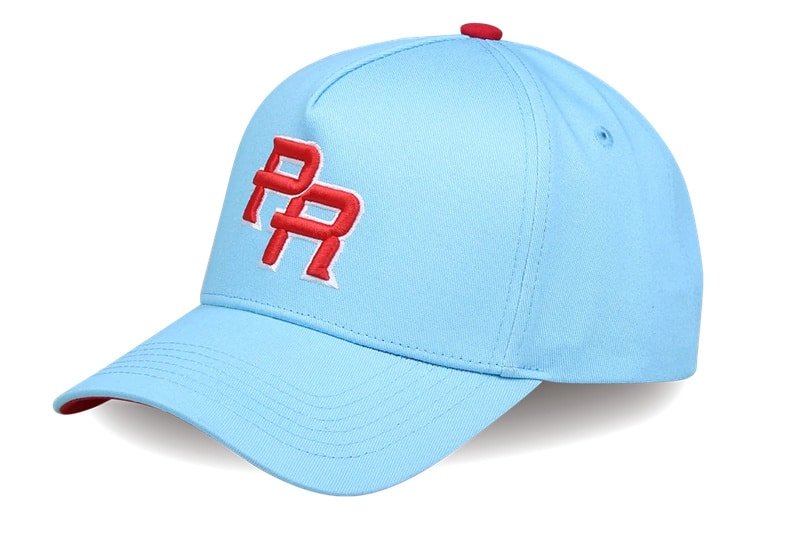
The defining feature of an A-Frame hat is its front crown construction. The front panels are shaped and supported to maintain a relatively tall, firm profile rather than collapsing naturally toward the wearer’s head. This structure gives the cap a stronger three-dimensional appearance and helps the front maintain its shape during wear.
The A-Frame construction is particularly important for the relationship between the crown, front panels, and visor. A higher or more pronounced front crown can make the visor appear more integrated into the overall silhouette, while changes in crown height, panel angle, reinforcement, and visor shape can noticeably change the finished appearance.
The construction may include a structured front reinforced with buckram or another supporting material, although the exact materials vary by manufacturer. An A-Frame hat can also use different back closures, including snapbacks, straps, or other adjustable systems. Likewise, the visor can be flat, pre-curved, or customized according to the product design.
For custom production, buyers should therefore avoid specifying only “A-Frame.” A more useful specification includes crown height, front-panel construction, reinforcement, visor shape, fabric, closure, and decoration method. These details determine the actual product more reliably than the frame name alone.
What Does an A-Frame Hat Look Like?
An A-Frame hat typically has a tall, clean, and prominent front profile. From the front, the crown creates a relatively large visual area above the visor; from the side, the structured front produces a noticeable transition between the crown and brim.
This profile also makes the front of the hat an effective branding surface. Embroidery, woven patches, rubber patches, leather patches, and printed graphics can be placed on the front panels without the crown appearing visually flat. For brands using larger or highly visible logos, this additional front presence can be an important design consideration.
However, the A-Frame appearance is not determined by crown height alone. A flat visor can create a more contemporary and structured look, while a curved visor can make the same crown construction appear more traditional or athletic. Fabric weight, front-panel reinforcement, seam placement, and crown proportions can also change how pronounced the A-Frame looks.
For this reason, two hats both marketed as A-Frame may not look identical. When developing a custom A-Frame hat, the actual crown profile and construction specifications should be confirmed with the supplier through measurements, digital mockups, or a physical sample rather than relying solely on the terminology.
What Is a K-Frame Hat?
A K-Frame hat is a cap construction characterized by the shape and structure of its front crown and panels. Compared with the more pronounced front profile commonly associated with an A-Frame, a K-Frame generally creates a cleaner, more controlled crown silhouette. The difference is not simply about whether the crown is high or low; it comes from how the front panels, crown shape, reinforcement, and visor work together to create the finished profile.
K-Frame is also a term that can vary between hat manufacturers and suppliers. Unlike standardized specifications such as a 5-panel or 6-panel construction, the name alone does not define every measurement or component of the cap. For custom development, the actual crown dimensions, panel construction, reinforcement, and visor shape should therefore be confirmed with the manufacturer.
K-Frame Hat Structure
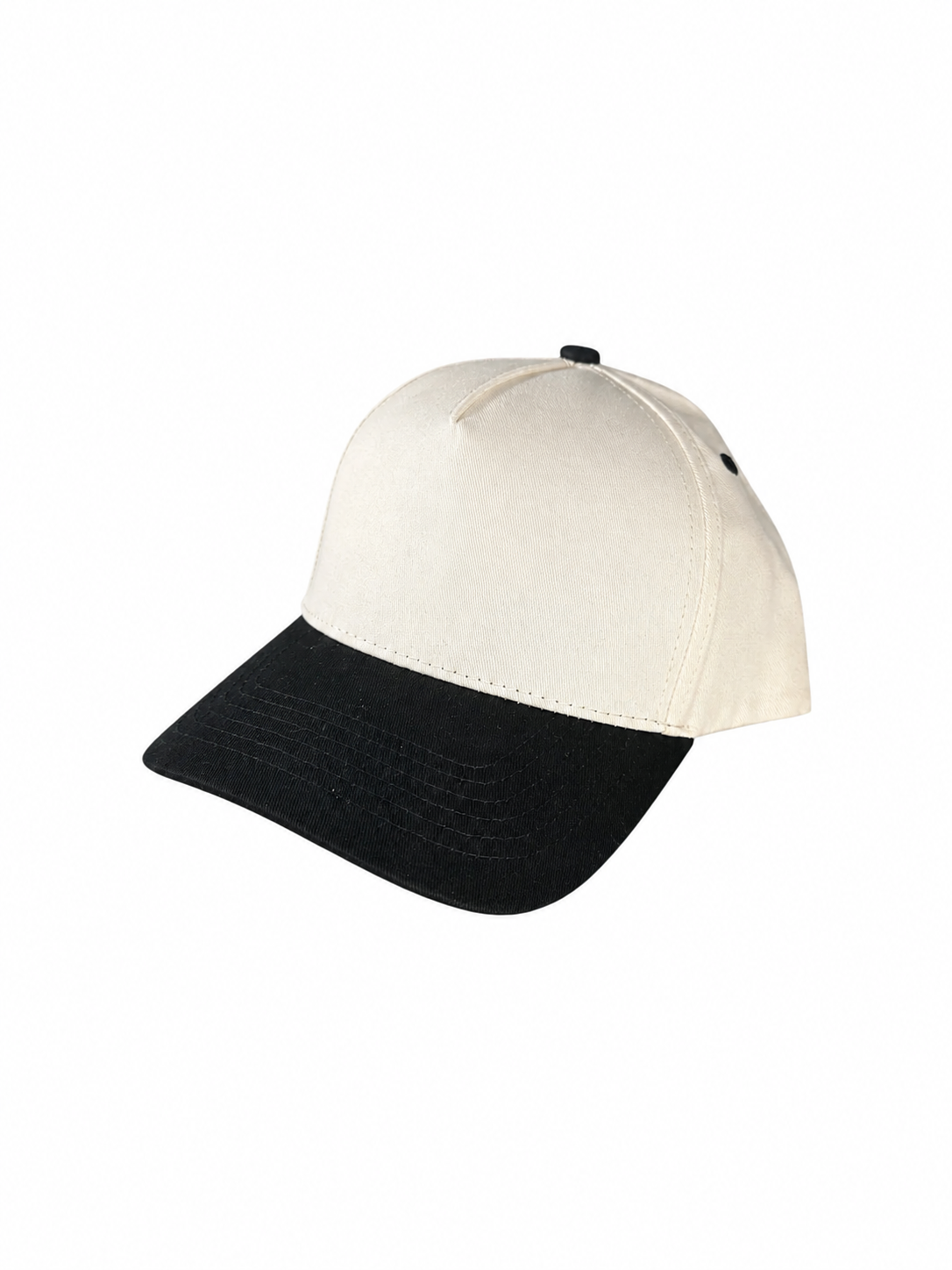
The structure of a K-Frame hat is primarily determined by the geometry of the front crown. Its front panels are constructed to maintain a defined shape while producing a relatively smooth transition from the crown to the visor.
This makes the relationship between crown height, front-panel angle, and visor position particularly important. A small change in any of these elements can change the visual profile of the finished hat. For example, increasing the crown height can make the cap appear more substantial, while changing the front-panel angle can make the crown look sharper or more relaxed without changing the basic frame classification.
K-Frame hats may use structured front panels with buckram or other reinforcement materials, but the specific construction depends on the manufacturer and product specification. The frame itself does not determine the fabric, closure, visor, or decoration. A K-Frame cap can be produced with materials such as cotton, polyester, nylon, canvas, or performance fabrics, and can use snapback, strapback, or other closure systems.
For B2B custom orders, it is therefore more useful to define a K-Frame hat through measurable specifications rather than the name alone. A production brief should consider:
- Crown height and profile
- Front-panel construction and reinforcement
- Panel angle and seam placement
- Visor shape and curvature
- Fabric weight and hand feel
- Closure and fit
- Logo placement and decoration method
These details determine whether the final product actually matches the intended K-Frame appearance.
What Does a K-Frame Hat Look Like?
A K-Frame hat generally has a structured but streamlined front profile. Rather than making the front crown the most visually dominant element, the construction aims for a more balanced relationship between the crown, side panels, and visor.
From the front, the crown typically provides a clean surface for branding without creating an excessively tall silhouette. From the side, the crown and visor form a more controlled profile, with the exact appearance depending heavily on crown height and visor construction.
This makes K-Frame construction useful for brands that want a contemporary cap without an overly aggressive crown shape. It can accommodate common customization methods such as flat embroidery, 3D embroidery, woven patches, rubber patches, leather patches, and printing. However, the suitability of a particular decoration method depends on the actual front-panel material and construction rather than the K-Frame designation itself.
One important point when comparing K-Frame hats is that visual appearance should not be judged from the frame name alone. Two suppliers may describe their products as K-Frame while using different crown heights, reinforcement materials, or panel proportions. As a result, a K-Frame hat can range from relatively low and streamlined to moderately structured.
For buyers developing custom headwear, the most reliable approach is to evaluate the finished profile rather than the terminology. A technical specification, digital mockup, product sample, or reference hat can help ensure that the manufacturer understands the intended crown shape before bulk production begins.
A-Frame vs K-Frame Hats: Key Difference
The key difference between A-Frame and K-Frame hats is the geometry of the front crown and the resulting overall profile. A-Frame hats generally create a more pronounced, upright front silhouette, while K-Frame hats tend to have a more controlled and streamlined profile. However, the distinction is not determined by crown height alone. Front-panel angle, reinforcement, crown proportions, visor shape, and construction methods can all change how the finished hat looks.
For buyers comparing the two styles, it is more useful to evaluate the actual construction and finished profile than to rely solely on the frame name.
| Feature | A-Frame Hat | K-Frame Hat |
|---|---|---|
| Front Profile | More pronounced and upright | More streamlined and controlled |
| Crown Appearance | Often appears taller and more substantial | Generally appears more balanced and refined |
| Front Panel | Strong visual presence | Cleaner, more integrated appearance |
| Crown-to-Visor Relationship | More noticeable transition | Usually smoother transition |
| Branding Surface | Strong presence for prominent logos | Suitable for clean and focused branding |
| Overall Aesthetic | Bold, structured, distinctive | Clean, modern, understated |
| Design Flexibility | Can support bold visual treatments | Well suited to minimalist and balanced designs |
| Customization | Embroidery, patches, printing, etc. | Embroidery, patches, printing, etc. |
How to Choose Between an A-Frame and K-Frame Hat
Choose an A-Frame hat for a more pronounced crown, stronger front profile, and prominent branding. Choose a K-Frame hat for a cleaner, smoother, and more streamlined silhouette. For custom hats, consider the crown height, visor shape, material, logo placement, and intended use. Since frame terminology can vary between manufacturers, confirm the design with a sample or detailed specifications before bulk production.
| Factor | A-Frame | K-Frame |
|---|---|---|
| Crown Profile | More pronounced | Smoother |
| Overall Look | Bold and structured | Clean and streamlined |
| Branding | Prominent logos and patches | Minimalist branding |
| Best For | Streetwear, promotional, lifestyle | Casual, lifestyle, everyday wear |
| Customization | Crown, visor, logo, materials | Crown, visor, logo, materials |
A-Frame vs K-Frame: Which Is Better for Different Uses?
There is no single frame style that is better for every application. A-Frame hats generally work well when a pronounced front profile and stronger visual presence are important, while K-Frame hats are often a better fit for designs that call for a cleaner and more streamlined silhouette. The right choice depends on the product’s target market, branding, styling, and functional requirements.
Streetwear and Fashion Brands
For streetwear and fashion collections, an A-Frame can be a strong choice when the hat itself needs a distinctive silhouette. Its more pronounced front crown can create a noticeable shape that supports bold logos, patches, and graphic treatments.
A K-Frame can work better for collections built around minimalist styling. Its controlled profile can integrate more easily with different outfits and apparel silhouettes without making the hat the dominant visual element.
The choice ultimately depends on whether the collection uses the hat as a statement accessory or a supporting part of the overall outfit.
Outdoor and Lifestyle Hats
For outdoor and lifestyle products, both frame styles can work, but construction details beyond the frame become more important.
An A-Frame can provide a strong structured profile for outdoor lifestyle products where appearance and branding are priorities. A K-Frame can offer a more streamlined alternative for everyday outdoor wear.
However, buyers should pay closer attention to fabric, ventilation, moisture management, weight, brim coverage, and fit when the hat is intended for actual outdoor use. Frame type alone does not determine performance.
Sports and Activewear
For sports and activewear, the frame should be selected alongside the functional requirements of the product.
A K-Frame may be suitable when a relatively streamlined crown is desired, particularly when the design needs to remain visually clean and lightweight. An A-Frame can also be used when a more structured appearance is part of the brand’s identity.
For running, golf, tennis, or other active applications, factors such as breathable materials, lightweight construction, sweat management, ventilation, and visor design are usually more important than whether the cap is classified as A-Frame or K-Frame.
Promotional and Event Hats
For promotional hats, the primary consideration is often the visibility and execution of the branding.
An A-Frame can provide a prominent front profile that works well for large logos and highly visible promotional graphics. It can be useful when the hat needs to create a strong branded impression from a distance.
K-Frame hats can also be effective for promotional orders, particularly when the brand prefers a cleaner appearance or a smaller, more refined logo treatment.
For bulk promotional production, buyers should also consider MOQ, decoration method, color matching, sample approval, production lead time, and unit cost.
Retail and Private-Label Collections
For retailers and private-label brands, the decision should be based on how the hat fits into the wider product assortment.
An A-Frame can add a more distinctive structured option to a collection, particularly when the brand’s design language favors bold silhouettes.
A K-Frame can provide a more understated option that may be easier to coordinate with different apparel styles.
For private-label development, the frame should be evaluated together with fabric, color, visor, closure, logo treatment, and target price point rather than treated as an isolated product feature.
Custom and Wholesale Hat Orders
For B2B buyers, the most important question is not simply “Which frame is better?” but which construction best matches the product specification.
An A-Frame may be appropriate when the brief calls for:
- A prominent front crown
- A distinctive structured silhouette
- Strong front-facing branding
- Large embroidery or patches
- A more visually substantial cap
A K-Frame may be appropriate when the brief calls for:
- A streamlined crown profile
- Balanced crown-to-visor proportions
- A cleaner visual appearance
- More understated branding
- An everyday lifestyle aesthetic
For either option, the manufacturer should confirm the actual crown dimensions, front-panel construction, reinforcement, visor shape, fabric, closure, and decoration requirements before production.
Quick Application Guide
| Application | A-Frame | K-Frame | Key Consideration |
|---|---|---|---|
| Streetwear | Strong visual presence | Clean, modern profile | Overall brand aesthetic |
| Lifestyle | Structured appearance | Streamlined appearance | Everyday styling |
| Outdoor | Bold profile | Controlled profile | Material and functionality |
| Sports | Brand-driven structure | Streamlined design | Breathability and weight |
| Promotional | Prominent branding | Refined branding | Logo visibility and cost |
| Private Label | Distinctive silhouette | Versatile profile | Product assortment |
| Wholesale Custom | Bold custom profile | Clean custom profile | Production specifications |
The frame should therefore be treated as one component of the product design, not the sole factor determining suitability. For custom headwear, the most reliable decision comes from matching the frame construction with the crown profile, visor, materials, decoration, target customer, and intended use.
For brands and wholesale buyers developing custom A-Frame or K-Frame hats, working with an experienced headwear supplier can help turn a frame concept into a consistent production specification. SUMKCAPS provides OEM and ODM custom headwear services, with options for fabrics, colors, embroidery, patches, visors, closures, and other details. Buyers can also use samples to confirm the crown profile and overall construction before moving into bulk production.
FAQ
An A-Frame hat typically features a more pronounced, upright front crown with a structured and distinctive profile.
A K-Frame hat generally has a more controlled and streamlined front crown, creating a clean and balanced silhouette.
A-Frame hats generally have a more prominent front profile, while K-Frame hats tend to have a smoother and more streamlined crown shape.
Not necessarily. Both can be structured; the main difference is the crown and front-panel profile rather than simply the level of structure.
Yes. Their structured front panels can provide a suitable surface for embroidery, patches, and other custom branding.
Yes. Both can be customized with different materials, colors, visors, closures, embroidery, patches, and other branding options.
No. A-Frame describes the crown profile, while 5-panel describes the number and arrangement of panels. A hat can incorporate characteristics of both.
No. K-Frame refers to the front crown construction and profile, while 6-panel describes the panel configuration. They are different design classifications.