
Yes, usually. For windy commutes, winter dog walks, or long periods standing outdoors, we at SUMKCAPS recommend a trapper hat with ear flaps that reach below your earlobes and sit close to your cheeks. Compared with a standard knit beanie that rides up, a well-fitting trapper hat gives your ears more consistent coverage when you turn into the wind. For a brisk walk or run, we often recommend a deep-fitting beanie instead, especially if you wear it under a wind-resistant jacket hood. The deciding factor is whether your ears stay covered while you do what you went outside to do.

Why Do My Ears Still Feel Cold Under a Winter Hat?
Picture waiting for a bus on a winter morning. Your hat feels warm as you leave home. At the corner, you turn to look down the street, and the wind catches the bottom of one ear. The air temperature has barely changed. What changed was the direction of the wind and how much skin your hat left exposed.
The U.S. National Weather Service wind chill chart shows why that gap matters. At an air temperature of 30°F (about −1°C), a 5 mph wind produces a wind chill of 25°F. At the same temperature, a 20 mph wind brings the wind chill down to 17°F. Those figures describe the effect of wind on exposed skin. They help explain why an uncovered earlobe feels colder on an open platform than on a sheltered street. The temperature inside either hat would need to be measured separately.
A beanie relies on its lower edge to keep both ears covered. If the crown is shallow, pulling the front down to your eyebrows may still leave the bottom of your ears exposed. A wide folded cuff can create a similar problem. You get a double layer around the upper ear, but the fold shortens the hat exactly where you need more depth.
A trapper hat solves that fit problem by extending fabric below the crown on each side. You can keep the front at a comfortable height above your eyes while the flaps cover your earlobes. That advantage depends on the shape of the flaps. A long flap can cover your ear in a mirror and still leave an opening near your cheek when the wind comes from the front or side.
We suggest checking three places while wearing your usual coat: the top of your ear, the earlobe, and the area directly behind your ear. Turn as though you were checking for traffic. If the cuff moves or a flap catches on your collar, you have found a fit issue. If everything stays covered but you can still feel a draft through the fabric, look more closely at the construction.
Which Hat Features Make the Biggest Difference in the Wind?
When we compare winter hat samples, we start at ear level. A thick crown can feel warm in your hands, yet tell you very little about the thinner panel beside your ear. Likewise, a photo of a plush lining may show the inside of the crown without revealing where that lining ends. For a windy-day hat, the side view and the inside of the ear panel are often the most useful views.
| Característica | What to check on a trapper hat | What to check on a beanie |
|---|---|---|
| Cobertura auricular | Lower the flaps and check whether each one covers the earlobe and the back of the ear. | Wear the cuff as you normally would and check whether its lower edge reaches below both earlobes. |
| Gaps at the sides | Turn your head and see whether the front edge of the flap lifts away from your cheek. | Put on your glasses and check whether the temples create gaps or push the cuff upward. |
| Fabric and lining | Follow the lining from the crown to the lower edge of the flap. Check what actually sits over your ear. | Stretch the knit to its worn width. If there is a wind-resistant band, check its depth and position. |
| Fit with outerwear | Zip up your usual coat and see whether the collar pushes the flaps forward. | Pull up your hood, turn both ways, and check whether the hood drags the beanie above your ears. |
Warmth and wind resistance depend on different construction details. A soft lining adds insulation around the ear. The outer fabric and the fit of the edges affect how easily moving air reaches that lining. This is why we would choose a close-fitting beanie with a wind-resistant ear band over a loose trapper hat whose flaps lift in every gust. Conversely, a beanie made from an open knit may leave your ears feeling chilly even when its cuff reaches low enough.
Our five-panel corduroy earflap baseball cap illustrates what a product specification can tell you. It has a pre-curved visor, camouflage ear flaps, and a listed fit range of 7 to 7¾. The earflap design lets a buyer consider a baseball-cap silhouette for winter use. The size range helps narrow down the choice, but a wearer at either end of that range should still check where the flaps land. Two people who wear the same hat size can need different amounts of coverage below the crown.
Chapéu de caçador por atacado
Melhor chapéu de caçador por atacado | Quantidade mínima de encomenda: 200 unidades por cor e por desenho
A SUMKCAPS oferece chapéus de caçador de alta qualidade, concebidos para proporcionar o máximo conforto e proteção. A nossa coleção de chapéus de caçador para venda por grosso inclui uma vasta gama de estilos, cores e materiais para satisfazer as mais diversas necessidades — desde o vestuário clássico para atividades ao ar livre até à moda urbana moderna. Conhecidos pelo seu calor e design resistente ao vento, estes chapéus combinam funcionalidade com estilo. Com preços competitivos e opções flexíveis para encomendas em grande quantidade de chapéus de caçador, além de descontos sazonais, a SUMKCAPS facilita o abastecimento de artigos essenciais de inverno que oferecem um excelente desempenho e apelo comercial.
For a brand developing a boné de caçador personalizado, we recommend recording two measurements on the approved sample: the flap length from the crown seam to the lower edge, and the width across the ear. If the first sample leaves the back of the ear exposed, adding length alone may accomplish very little. A wider flap or a change to its position can address the actual gap.
Should I Choose a Trapper Hat or a Beanie for My Routine?
We would make different recommendations for someone waiting on an exposed platform and someone running past it, even on the same morning. These three examples show how to choose for the activity. The times illustrate typical routines rather than temperature or exposure limits.
Waiting 20 minutes for a bus or train
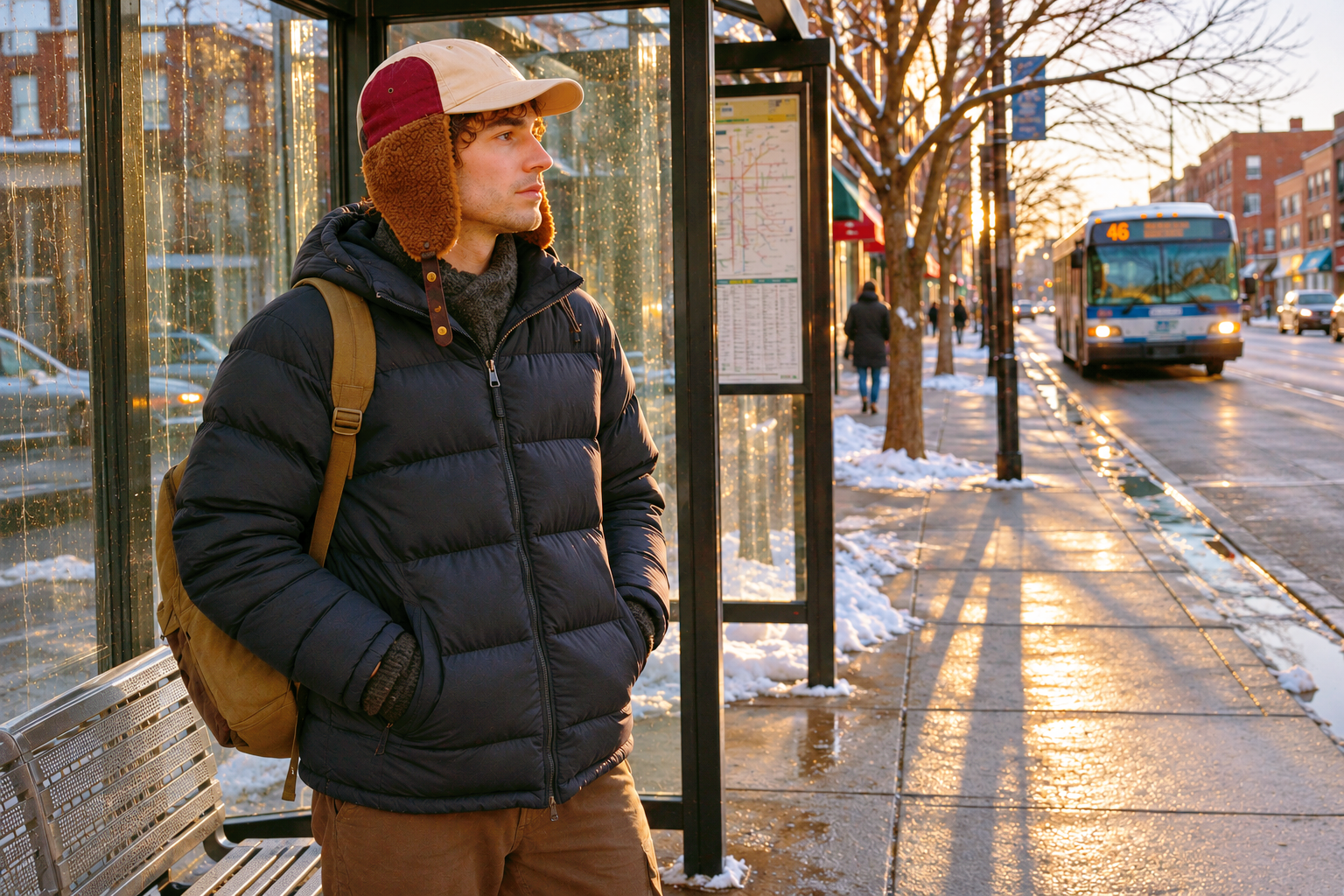
Choose the trapper hat if wind regularly reaches you from the side. Standing on a platform gives you little opportunity to warm up through movement, and you may turn repeatedly to check for your ride. Look for flaps that stay close to the face when you look over either shoulder. If the hat has a chin strap, try adjusting it while wearing gloves. A fastening you can comfortably use on the platform is worth more than one you tend to leave undone.
Taking a 30-minute brisk walk or run
Start with a deep-fitting beanie if you tend to warm up quickly or already carry a jacket with a wind-resistant hood. This combination gives you two adjustments during the same outing. On a sheltered stretch, wear the beanie on its own. When you turn onto an exposed bridge, pull up the hood and check that the cuff still covers your ears. If your usual route is a slower dog walk with frequent stops, we would lean toward the trapper hat, particularly if you prefer walking with your hood down.

Spending 60 minutes at an outdoor post
For event staff or other stationary outdoor roles where the dress requirements permit it, we would sample a trapper hat with flaps that can be secured. Test it with the actual uniform. A high collar can lift the rear edge of a flap, and glasses can make a fastening that felt comfortable at first press against the side of the head.
Para os compradores que estão a comparar venda por grosso de chapéus de caçador Opções: recomendamos que seja a mesma pessoa a experimentar cada amostra com o mesmo casaco. Peça-lhe para ficar virada para a frente, olhar por cima de cada ombro e inclinar a cabeça para cima. Registe o movimento que deixa a orelha exposta. “A aba esquerda levanta-se quando a pessoa olha para a direita” constitui um pedido de revisão muito mais claro para o fornecedor do que “faça o chapéu mais quente”.”
FAQ
R: Sim, pode. Procura um modelo resistente ao vento que chegue abaixo dos lóbulos das orelhas e se mantenha no lugar quando te virares. Um gorro justo com essa cobertura pode ser uma escolha melhor do que um chapéu de caçador com abas soltas.
R: Se as rajadas de vento levantarem as abas, utilize o fecho para as aproximar das suas bochechas. Deixe espaço suficiente para falar e virar-se confortavelmente. Se, ao apertar a tira, sentir pressão na mandíbula enquanto as laterais continuam abertas, experimente um formato diferente de aba.
R: Verifique o punho enquanto olha por cima do ombro. É possível que a gola o tenha empurrado para cima. Se o punho permanecer no lugar, sinta por onde entra a corrente de ar. Uma corrente de ar que passa pela malha indica o tecido, enquanto uma corrente de ar perto dos óculos sugere uma abertura na borda.
R: Na SUMKCAPS, recomendamos que se verifique a cobertura das orelhas nos utilizadores em toda a gama de tamanhos prevista, utilizando os seus casacos e óculos habituais. Fotografe o ajuste aprovado de perfil e registe as medidas das abas, para que a equipa de produção tenha uma referência clara.


