Vai al contenuto
A visor is generally better for running when airflow, heat release, and a lightweight feel are the main priorities, while a running cap is better when you want more head coverage, scalp sun protection, and greater versatility in cooler or changing weather. Both can protect your face and eyes from the sun, but their different designs make them better suited to different running conditions.
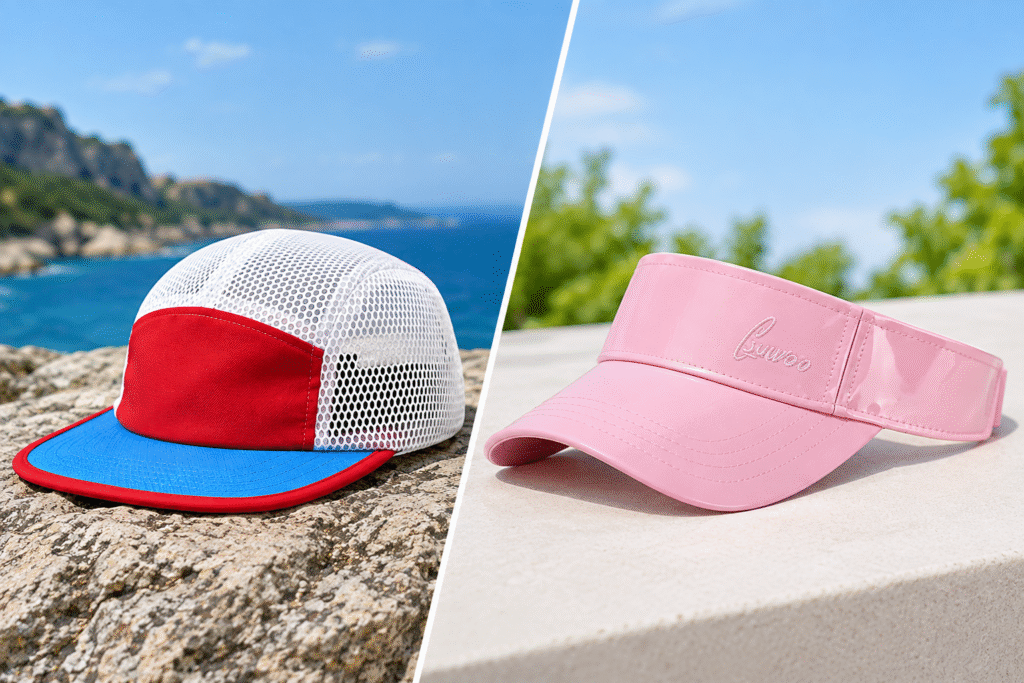
The main difference is head coverage. A visor leaves the top of the head open, allowing more airflow around the scalp, while a running cap covers the entire head and provides additional protection from sunlight, wind, and light weather. Your choice should therefore depend on temperature, sun exposure, sweat, weather conditions, and how much head coverage you prefer.
Visor vs. Running Cap for Running: Quick Comparison
| Caratteristica | Running Visor | Running Cap |
|---|---|---|
| Head Coverage | Minimal | Completo |
| Airflow | Eccellente | Good to Excellent |
| Heat Release | Eccellente | Bene |
| Protezione solare | Face and Eyes | Head, Face, and Eyes |
| Gestione del sudore | Eccellente | Eccellente |
| Peso | Very Lightweight | Leggero |
| Hot Weather | Eccellente | Bene |
| Cooler Weather | Limited | Better |
| Light Rain | Limited | Better |
| Hairstyle Flexibility | Alto | Moderato |
| Il migliore per | Hot-weather and high-airflow running | Versatile running in different conditions |
A running visor and a running cap can both be effective for running, but they solve slightly different problems. A visor prioritizes ventilation and reduced coverage, while a running cap provides more complete protection and weather versatility.
When Is a Visor Better for Running?
A running visor is particularly useful when keeping your head cool is more important than having full head coverage. Its open-top design allows air to circulate around the scalp while the brim helps shade the eyes and face.

Running in Hot and Humid Weather
Hot and humid conditions can make a run feel considerably more uncomfortable, especially when a traditional cap traps heat around the scalp. A visor leaves the top of the head uncovered, allowing heat to escape more easily.
For summer running, outdoor training, and other activities in warm climates, this open construction can make a visor feel cooler than a full-coverage cap.
However, a visor does not provide the same scalp protection as a running cap. If direct sunlight on the top of your head is a concern, a cap may be more appropriate.
When Maximum Airflow Matters
One of the biggest advantages of a visor is airflow.
Because there is no crown covering the top of the head, air can move more freely around the scalp. This can be particularly useful during high-intensity workouts, long runs, or training sessions in warm weather.
For runners who prioritize ventilation, the design of a visor provides a simple advantage: it shades the face and eyes without covering the entire head.
For Runners Who Sweat Heavily
Sweat management is important during running, but more fabric around the head does not necessarily mean better sweat control. A well-designed running visor can combine a moisture-managing sweatband with an open-top structure.
A good running visor should ideally include:
- A moisture-wicking sweatband
- Quick-drying fabric
- Struttura leggera
- A comfortable adjustable closure
- A breathable design
The sweatband helps manage perspiration around the forehead, while the open top reduces the enclosed feeling that some runners experience with full caps.
For Runners Who Prefer Less Head Coverage
Some runners simply do not like the feeling of having their entire head covered. A visor provides the benefits of a brim without the full crown.
This can also be useful for runners with longer hair. Ponytails and buns can be easier to accommodate with a visor, depending on the closure and design.
For runners who want sun protection around the face while keeping the top of the head open, a visor can be a practical option.
When Is a Running Cap Better for Running?
A running cap becomes more useful when you need additional protection beyond shading your face and eyes. Its full crown covers the top of the head and can provide more protection in sunny, cool, windy, or changing conditions.

When You Need More Sun Protection
A visor primarily protects the face and eyes from direct sunlight. A running cap extends that coverage to the scalp and top of the head.
This difference matters during long outdoor runs when the head is exposed to sunlight for an extended period.
If scalp coverage is one of your priorities, a running cap provides more coverage than a visor. Lightweight, breathable materials can help prevent the cap from feeling excessively warm while still providing coverage.
When Running in Cooler Weather
A full running cap can be more comfortable than a visor when temperatures are cooler.
Early-morning runs, fall training, and windy conditions can make the additional head coverage useful. While a standard running cap is not designed to function as winter headwear, its crown provides more coverage than an open-top visor.
For runners who regularly train across different seasons, a lightweight running cap can therefore be more versatile.
When Weather Conditions Can Change
Running conditions can change quickly, especially during longer outdoor sessions. A running cap provides more coverage against wind and light rain than an open visor.
However, it is important to distinguish between a standard running cap and a waterproof performance cap. A regular cap may resist a small amount of moisture, but it should not automatically be considered waterproof.
For unpredictable weather, the material and construction of the cap matter as much as the basic cap style.
When Full Head Coverage Feels More Comfortable
Comfort is highly personal. Some runners prefer the open feeling of a visor, while others feel more comfortable with a cap covering the entire head.
A well-fitting running cap can provide a secure feel during movement, particularly when it has an adjustable closure and lightweight construction.
For runners who prefer a traditional cap silhouette or want their head covered during outdoor activity, a running cap may feel more natural.
Running Visor vs. Running Cap: Which One Should You Choose?
The better option depends on your running environment and personal priorities rather than one style being universally better.
Scegliere un running visor if your main priorities are:
- Maximum airflow
- Heat release
- Hot-weather comfort
- Struttura leggera
- Less head coverage
- Hairstyle flexibility
Scegliere un running cap if your main priorities are:
- Full head coverage
- Scalp sun protection
- Cooler-weather running
- Wind protection
- Greater weather versatility
- A traditional cap fit
In simple terms, a visor is more focused on ventilation and minimal coverage, while a running cap is more focused on coverage and versatility.
For brands developing performance headwear, these differences are also important when selecting materials, construction, sweatbands, closures, and brim designs.For brands developing performance headwear, these differences are also important when selecting materials, construction, sweatbands, closures, and brim designs. SUMKCAPS offers custom headwear solutions for brands and businesses, including visor caps wholesale options for buyers looking to develop lightweight, breathable visor styles for running, sports, golf, and other outdoor activities.
Common Questions About Running Visors and Running Caps
A hat or visor can help shade the eyes and face from direct sunlight, while also helping manage sweat around the forehead. A running cap additionally covers the scalp, whereas a visor allows more airflow around the top of the head.
There is no single running hat or visor that is best for every runner. For 2026, the key features to consider remain the intended running conditions and product performance: lightweight construction, breathability, moisture management, secure fit, comfortable sweatbands, and appropriate sun protection.
For hot-weather running, an open-top visor can prioritize airflow. For runners who need more coverage, a lightweight breathable running cap may be more suitable.
A visor does not cover the top of the head, so it provides less scalp protection and less coverage against wind and light rain. If you run in cooler weather or want more overall sun coverage, a running cap may be more practical.
A running cap is not universally better than a visor. It provides more head coverage and greater versatility in cooler or changing weather, while a visor provides more airflow and less coverage. The right choice depends on the runner’s environment and priorities.
Yes. A visor can work well for long-distance running because it is lightweight and provides good airflow around the head. A moisture-wicking sweatband and secure adjustable fit are particularly important for longer runs.