
Fleece, wool, nylon, polyester, faux fur, and Sherpa are among the most common materials used for trapper hats. Fleece provides lightweight warmth, wool offers excellent insulation, nylon improves wind and moisture resistance, while faux fur and Sherpa are often used for soft, warm linings and earflaps. The best material depends on the intended weather conditions, level of warmth, comfort, durability, and overall product positioning.
For a well-designed trapper hat, the choice is rarely about selecting one material for the entire hat. Most high-performance trapper hats combine an outer shell, insulation, lining, and earflap materials to balance warmth, weather protection, comfort, and weight.
What Materials Are Used for Trapper Hats?
Trapper hats can be made from a wide range of natural and synthetic materials. The most suitable choice depends on whether the hat is designed primarily for extreme cold, everyday winter wear, outdoor work, snow and wind protection, or fashion.
Common trapper hat materials include:
- Fleece: Lightweight, soft, warm, and relatively affordable. Commonly used for linings and earflaps.
- Lana: Naturally insulating and breathable, making it suitable for cold-weather and premium winter hats.
- Nylon: Lightweight and durable, with good resistance to wind and moisture. Often used for the outer shell.
- Poliéster: Versatile, durable, and easy to maintain. It can be used for shells, linings, and synthetic insulation.
- Faux fur: Soft and warm, commonly used around the earflaps and interior for comfort and visual appeal.
- Sherpa: Thick and soft with a fleece-like texture, often used as a warm lining.
- Algodón: Comfortable and breathable but generally less suitable for severe winter conditions unless combined with insulation.
- Leather and suede: Durable and visually distinctive, often used for premium or fashion-oriented trapper hats.
- Synthetic insulation: Used between the shell and lining to increase warmth without making the hat excessively heavy.
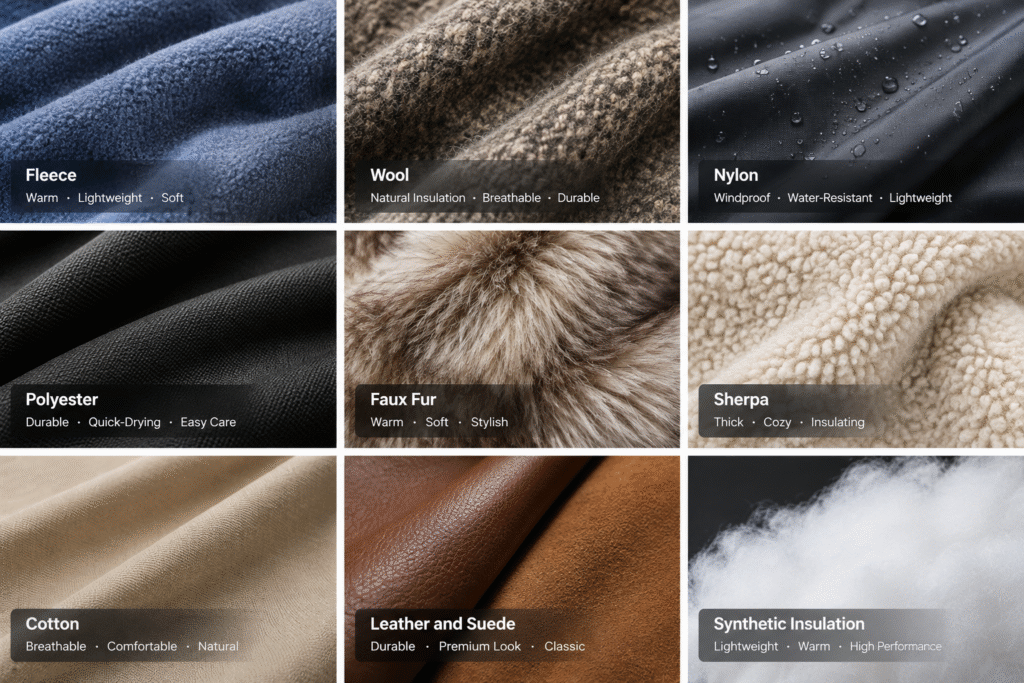
The important point is that material selection should be considered as a system rather than a single-fabric decision. A nylon shell with fleece lining, for example, can provide a better combination of weather resistance and comfort than a trapper hat made entirely from either nylon or fleece.
What Materials Are Used for Each Part of a Trapper Hat?
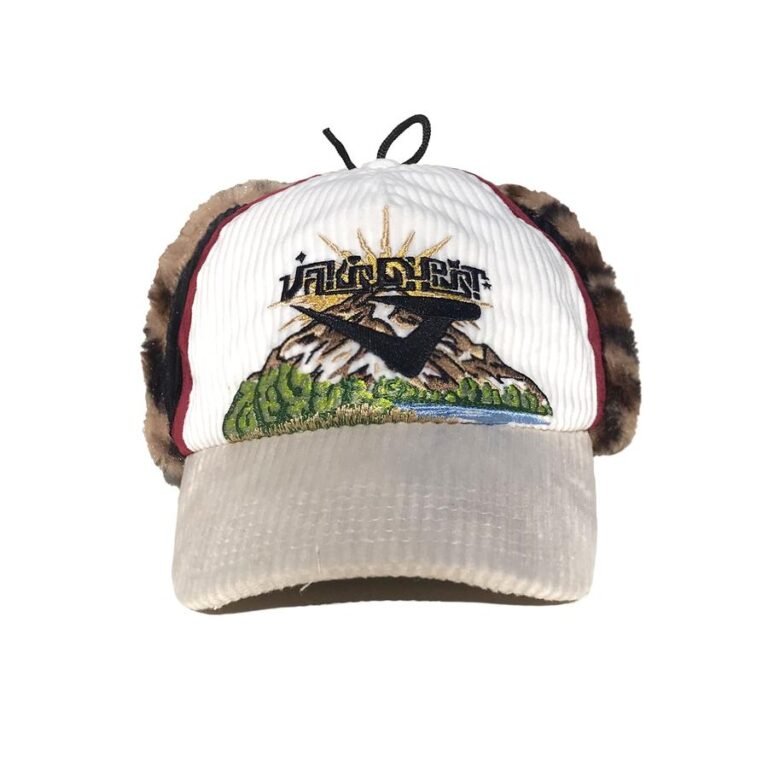
A trapper hat consists of several functional components, and each part may use a different material. Understanding this construction helps explain why two trapper hats made from similar-looking fabrics can perform very differently.
Outer Shell
The outer shell is the first layer exposed to wind, snow, moisture, abrasion, and general wear. Common materials include nylon, polyester, wool, cotton, leather, and suede.
Nylon and polyester are particularly useful for outdoor-oriented designs because they are lightweight and durable. Nylon can provide strong wind and moisture resistance, while polyester offers good dimensional stability and easy care.
Wool is more often selected when natural warmth and a premium appearance are priorities. Leather and suede can provide a distinctive fashion-oriented look, but they require different care and may need additional treatment to improve weather resistance.
For outdoor use, the outer shell should not be judged by warmth alone. Its primary job is to create a protective barrier against the environment.
Earflaps
Earflaps are one of the most important functional components of a trapper hat because they protect the ears and sides of the face from cold air.
Common materials include:
- Vellón
- Piel sintética
- Sherpa
- Lana
- Quilted polyester
Soft materials are generally preferred because the earflaps can come into direct contact with the skin. Fleece provides warmth without adding excessive weight, while faux fur and Sherpa can create a thicker and warmer feel.
For extremely cold environments, earflaps may also incorporate insulation between the outer fabric and inner lining.
Forro
The lining is the layer that sits closest to the head, so comfort, softness, moisture management, and warmth become particularly important.
Fleece, polyester, faux fur, and Sherpa are common lining materials.
A good lining should provide warmth without creating excessive bulk. It should also be comfortable during extended wear because the head and ears are sensitive to rough or poorly selected materials.
For everyday winter hats, fleece is often a practical choice because it combines warmth, softness, low weight, and relatively easy maintenance.
Insulation
Insulation is different from the lining. The lining provides the surface that contacts the wearer, while insulation is designed to slow heat loss.
Common insulation materials include:
- Polyester fiberfill
- Synthetic insulation
- Quilted polyester padding
- Wool insulation
The amount and structure of insulation can significantly affect the final warmth of a trapper hat. A thin nylon shell with adequate insulation and a warm lining can therefore perform much better in cold weather than a thick shell with little insulation.
For manufacturers, insulation thickness must also be balanced against fit. Too much insulation can make a hat bulky and affect how the earflaps fold, fasten, or sit around the head.
Chin Strap and Fasteners
Chin straps and fasteners may use materials such as nylon webbing, polyester webbing, cotton tape, or leather.
These components have a relatively small surface area, but they affect the practicality of the finished product. Outdoor trapper hats often require secure straps that can withstand repeated adjustment and movement.
The choice of buckle, snap, cord, or other fastening hardware can also influence the hat’s appearance and overall positioning.
The Importance of Material for a Trapper Hat
Material determines much more than how a trapper hat looks and feels. It directly affects thermal performance, weather resistance, weight, durability, comfort, and ultimately the situations in which the hat can be used.
Calor
Warmth is usually the first consideration when choosing a trapper hat.
However, warmth does not depend on the fabric name alone. It is influenced by:
- Material type
- Fabric weight
- Insulation thickness
- Forro
- Air retention
- Earflap construction
- Overall coverage
Wool and fleece are naturally associated with warmth, but a properly insulated synthetic trapper hat can also provide excellent cold-weather performance.
The best winter construction often combines several layers instead of relying on one thick material.
Wind Protection
Wind can make cold temperatures feel significantly colder, so wind resistance is especially important for outdoor use.
Nylon and tightly woven polyester are generally effective outer-shell materials because they can limit air penetration. Wool can provide some natural wind resistance depending on its construction, but loosely knitted or woven wool may require an additional shell for stronger protection.
For windy winter conditions, a wind-resistant shell + insulating layer + warm lining is often more effective than simply increasing fabric thickness.
Resistencia al agua
A trapper hat does not need to be completely waterproof for every application, but resistance to snow, light rain, and moisture can significantly improve its practicality.
Nylon and polyester are commonly used for weather-resistant outer shells. Some fabrics can also receive water-repellent treatments.
Wool has natural moisture-management properties, but it should not automatically be considered waterproof. Likewise, fleece provides warmth but offers limited protection against heavy rain or wet snow.
Therefore, if the intended market involves snow or wet outdoor conditions, the outer shell should receive more attention than the lining material.
Transpirabilidad
A hat that is extremely warm but does not allow sufficient moisture and heat to escape can become uncomfortable during physical activity.
Wool is known for good moisture management and breathability. Fleece is also comfortable for active winter use, although its performance depends on the fabric construction.
Synthetic shells such as nylon can provide excellent weather protection but may need a breathable construction or appropriate lining to prevent excessive heat and moisture buildup.
This creates an important design trade-off:
More protection does not always mean better comfort.
Peso
Weight becomes especially important when a trapper hat is worn for several hours or during physical activity.
Fleece, polyester, and nylon can provide substantial performance without excessive weight. Wool and thick faux fur can create a heavier or bulkier construction depending on the fabric weight.
For travel, outdoor recreation, or active winter sports, lightweight layered construction is often preferable to simply using heavier materials.
Durabilidad
Durability depends on both the material and the construction.
Nylon and polyester generally provide strong resistance to abrasion and repeated use. Wool can be durable but may require more careful care. Faux fur and fleece can maintain good performance when properly constructed, but their surface appearance can change with repeated friction.
For workwear or outdoor products, buyers should consider not only the fabric but also:
- Seam construction
- Stitch density
- Fastener quality
- Earflap attachment
- Strap strength
- Fabric abrasion resistance
Confort
Comfort becomes increasingly important when a trapper hat is worn for long periods.
Soft fleece, Sherpa, and faux fur are commonly selected for the areas that touch the head and ears. Wool can also be comfortable, but the specific wool fiber and finishing process matter because some wool fabrics can feel coarse against sensitive skin.
A good trapper hat should balance warmth with softness, moisture management, fit, and weight.
Fleece Trapper Hats: Warm, Lightweight, and Comfortable
Fleece is one of the most practical materials for trapper hats because it offers a strong balance between warmth, softness, weight, and cost.
It is particularly suitable for the lining and earflaps, where direct contact with the head makes comfort important.
Advantages of Fleece
- Ligero
- Soft against the skin
- Good insulation
- Comfortable for everyday use
- Easy to maintain
- Generally cost-effective

Custom Cinco Paneles Polar Fleece Ear Flap Ski Trapper Cap Wholesale
Esta gorra de esquí de cinco paneles de forro polar con orejeras está diseñada para ofrecer calidez y comodidad en condiciones frías. Fabricada en suave forro polar, cuenta con orejeras, visera plana y parche decorativo tejido a medida. Con un ajuste OSFM y personalización a todo color, admite servicios OEM y ODM y es ideal para colecciones de invierno y outdoor al por mayor.
Fleece also works well in layered construction. For example, a nylon outer shell combined with fleece lining can provide both weather protection and a soft interior.
Limitations of Fleece
Fleece is not an ideal standalone material for every winter environment. It has limited resistance to strong wind and heavy moisture compared with a weather-resistant outer shell.
For this reason, fleece is often more effective as part of a multi-layer construction rather than as the only material.
Best Uses
Fleece trapper hats are particularly suitable for:
- Everyday winter wear
- Casual outdoor activities
- Travel
- Mild to cold climates
- Lightweight winter collections
Wool Trapper Hats: Maximum Warmth for Cold Weather
Wool is a classic winter material because its natural fiber structure can trap air and provide effective insulation.
It also offers good breathability and moisture management, making it suitable for cold environments where warmth and comfort are both important.
Advantages of Wool
- Excellent natural insulation
- Good breathability
- Warm without requiring extremely thick construction
- Aspecto de alta gama
- Suitable for cold climates
- Can provide good durability when properly cared for

Gorra de invierno de lana de 6 paneles con orejeras al por mayor
Nuestra gorra de invierno de ala plana y lana de 6 paneles, diseñada para el hombre con estilo que valora tanto la comodidad como la funcionalidad. Estos gorros de orejeras suaves son perfectos para el invierno, combinando materiales de primera calidad con un diseño de moda. Ideales para la venta al por mayor, estas gorras son imprescindibles para cualquier minorista que desee ofrecer prendas de invierno de alta calidad y a la moda.
Wool is particularly attractive for premium winter collections because consumers often associate it with natural warmth and higher-end construction.
Limitations of Wool
Wool can be more expensive than basic synthetic fabrics and may require more careful care. Some wool fabrics can also feel less soft than fleece or Sherpa.
Wool can therefore be combined with softer materials such as fleece or faux fur to improve comfort.
Best Uses
Wool trapper hats are well suited to:
- Cold climates
- Premium winter collections
- Fashion headwear
- Traditional winter styles
- Outdoor winter wear
Nylon Trapper Hats: Windproof and Weather-Resistant
Nylon is particularly valuable when a trapper hat needs to protect the wearer from wind, snow, and moisture.
Unlike fleece or wool, nylon is usually not selected as the primary source of insulation. Instead, it works effectively as an outer protective layer.
Advantages of Nylon
- Ligero
- Strong and durable
- Good wind resistance
- Good moisture resistance
- Suitable for outdoor use
- Easy to combine with insulation
A nylon outer shell can be paired with fleece, faux fur, Sherpa, or synthetic insulation to create a highly functional winter trapper hat.
Limitations of Nylon
Nylon alone does not provide the same level of insulation as wool or thick fleece. It may also feel less comfortable against the skin.
Therefore, nylon is generally most effective when used as part of a layered construction.
Best Uses
- Snowy conditions
- Windy environments
- Outdoor work
- Winter sports
- Performance-oriented headwear
Faux Fur and Sherpa: Best Materials for Trapper Hat Linings
Faux fur and Sherpa are particularly useful when warmth, softness, and visual appeal are important.
Piel sintética
Faux fur provides a thick, soft surface and can give a trapper hat a premium or fashion-oriented appearance.
It is often used around:
- Earflaps
- Inner lining
- Ear openings
- Decorative edges
Its main strength is the combination of warmth and visual texture.
Sherpa
Sherpa has a fleece-like texture and is commonly used as a soft, insulating lining.
Compared with some types of faux fur, Sherpa can create a more casual outdoor aesthetic while still providing substantial warmth and comfort.
Both materials are generally more appropriate for lining and earflap applications than for the primary weather-resistant shell.
Fleece vs. Wool vs. Nylon: Which Material Is Best?
There is no universally best material because each performs differently.
| Característica | Vellón | Lana | Nylon |
|---|---|---|---|
| Calor | Alta | Very High | Medio |
| Peso | Light | Medio | Light |
| Wind Protection | Medio | Medio | Alta |
| Resistencia al agua | Bajo | Medio | Alta |
| Transpirabilidad | Alta | Alta | Medio |
| Durabilidad | Medio | Alta | Alta |
| Confort | Alta | Alta | Medio |
| Lo mejor para | Everyday winter | Cold climates | Wind & snow |
Choose fleece when lightweight warmth and comfort are priorities, wool when natural insulation and cold-weather performance matter most, and nylon when wind and moisture protection are more important.
For many applications, however, the best solution is a combination such as nylon + synthetic insulation + fleece lining, rather than choosing only one material.
What Is the Warmest Material for a Trapper Hat?
Wool is one of the warmest commonly used natural materials for trapper hats, but the warmest overall construction usually combines an insulating material, a warm lining, and a protective outer shell.
This distinction is important because the warmth of a trapper hat depends on its complete construction.
Por ejemplo:
Nylon shell + synthetic insulation + fleece lining
can provide excellent cold-weather performance because each layer has a specific function:
- Nylon: blocks wind and helps resist moisture.
- Insulation: reduces heat loss.
- Fleece: provides warmth and comfort next to the head.
A thick wool shell may provide excellent natural insulation, but it may not offer the same level of weather protection as a properly constructed technical outer shell.
Therefore, when evaluating the warmest trapper hat, look at the entire material system rather than the primary fabric alone.
Best Trapper Hat Materials by Use Case
The right material depends heavily on where and how the trapper hat will be used.
For Extreme Cold
For extremely cold environments, prioritize insulation and full coverage.
Recommended combinations include:
- Lana
- Synthetic insulation
- Fleece lining
- Piel sintética
- Sherpa
A multi-layer construction is generally more effective than relying on a single heavy fabric.
For Snow and Wind
For snowy and windy conditions, weather protection becomes more important.
A practical construction is:
Nylon outer shell + synthetic insulation + fleece or faux fur lining
The nylon shell helps reduce wind and moisture penetration, while the inner layers provide warmth.
For Everyday Winter Wear
For daily winter use, comfort and weight often matter more than maximum weather resistance.
Good options include:
- Vellón
- Mezclas de lana
- Poliéster
- Fleece-lined cotton blends
Fleece is particularly practical because it offers warmth without making the hat excessively heavy.
For Outdoor Work
Outdoor work requires a combination of warmth, durability, and weather protection.
Nylon and polyester are useful outer-shell materials because they can withstand regular wear. They can be combined with fleece or synthetic insulation to improve warmth.
For workwear, construction quality is just as important as fabric selection.
For Fashion
Fashion-oriented trapper hats provide more flexibility in material selection.
Common choices include:
- Lana
- Mezclas de lana
- Ante
- Piel
- Piel sintética
- Sherpa
In this category, texture, color, silhouette, and perceived quality may be as important as technical performance.
What Is the Best Material for Custom Trapper Hats?
Para sombreros de trampero personalizados, there is no single best material. The right material should be selected according to the target market, season, product positioning, performance requirements, and production budget.
Por ejemplo:
| Product Positioning | Recommended Materials |
|---|---|
| Affordable winter collection | Polyester + fleece |
| Premium winter collection | Wool or wool blends |
| Outdoor performance | Nylon + insulation |
| Fashion trapper hats | Wool, suede, faux fur |
| Promotional winter hats | Polyester or fleece |
| Extreme cold products | Insulation + fleece/faux fur + weather-resistant shell |
For apparel brands and other B2B buyers, material selection should also consider decoration and production requirements.
Embroidery, patches, printing, trims, straps, and hardware can all interact with the selected material. Thick faux fur, for example, may require a different branding approach from a smooth nylon shell.
A proveedor de sombreros personalizados should therefore evaluate the entire product construction, rather than simply quoting based on the outer fabric.
For brands developing custom winter headwear, SUMKCAPS can support material and construction selection based on the intended product positioning and customization requirements.
How Do Trapper Hat Materials Affect Wholesale Pricing?
Material is an important factor in wholesale pricing, but it is not the only one.
The final cost can be influenced by:
- Material type
- Fabric weight
- Wool percentage
- Insulation thickness
- Lining material
- Outer-shell construction
- Earflap design
- Fasteners and hardware
- Decoración
- Embalaje
- Cantidad del pedido
- Customization requirements
For example, a wool trapper hat may have a higher material cost than a polyester model, but the difference in the final wholesale price also depends on the lining, construction, decoration, hardware, and order quantity.
Similarly, a nylon trapper hat is not automatically inexpensive. A technical nylon shell combined with high-performance insulation, premium lining, custom hardware, and complex construction can cost considerably more than a basic fleece hat.
For B2B buyers, the better approach is to compare complete product specifications rather than material price alone.
When requesting a wholesale quote, provide the supplier with the intended material, lining, insulation, construction, decoration, quantity, and target use. This allows the supplier to provide a more accurate quotation and reduces price differences caused by incomplete specifications.
Preguntas frecuentes
Fleece is ideal for lightweight warmth, wool provides strong natural insulation, and nylon is better for wind and moisture protection.
Wool generally provides stronger natural insulation, while fleece is lighter and often softer. Actual warmth depends on the complete hat construction.
Yes. Nylon is an excellent outer-shell material because it is lightweight, durable, and resistant to wind and moisture.
Fleece, faux fur, Sherpa, polyester, and synthetic insulation are commonly used inside trapper hats for warmth and comfort.
Earflaps are commonly made with fleece, faux fur, Sherpa, wool, or quilted polyester to provide warmth and protect the ears.
Faux fur, Sherpa, and thick fleece are among the warmest lining options, especially when combined with effective insulation.
Not necessarily. Water resistance depends mainly on the outer-shell material and any water-resistant treatment. Nylon and polyester generally provide better moisture protection than fleece.


